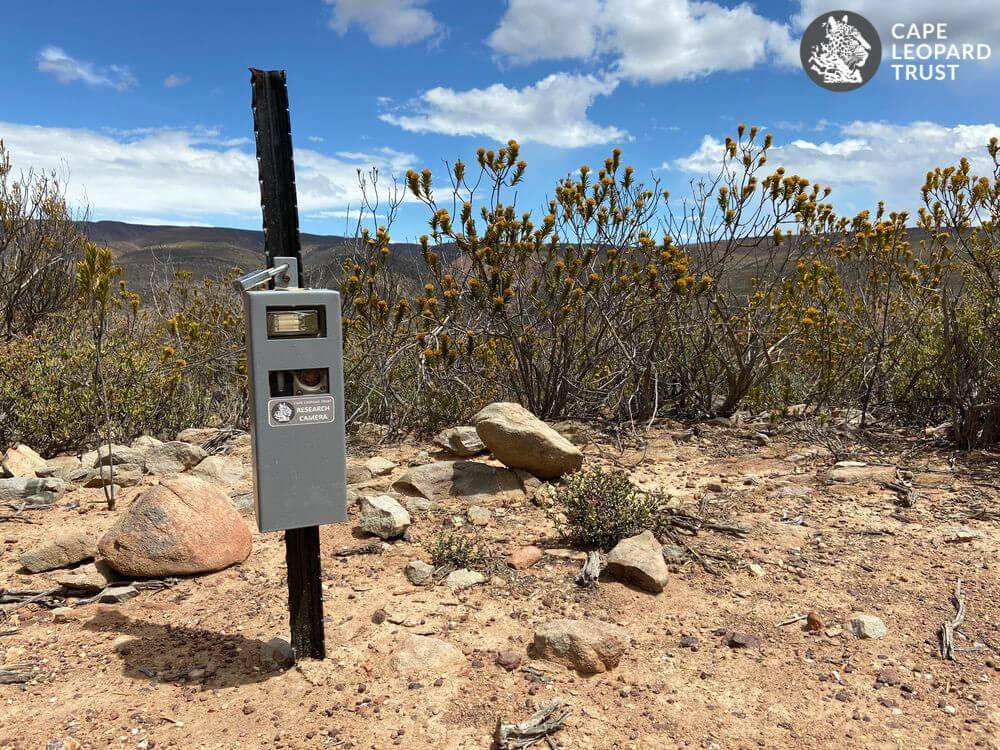

These devices act like permanent fieldworkers, documenting the secret lives of wildlife across our study areas for months at a time. They work in rain and sunshine, capturing the data we need to answer important research and conservation questions. But, as is the case with virtually all electronic equipment, camera traps have a limited lifespan. What happens to them at the end of their lives – and what is the environmental cost of powering these hard-working devices?
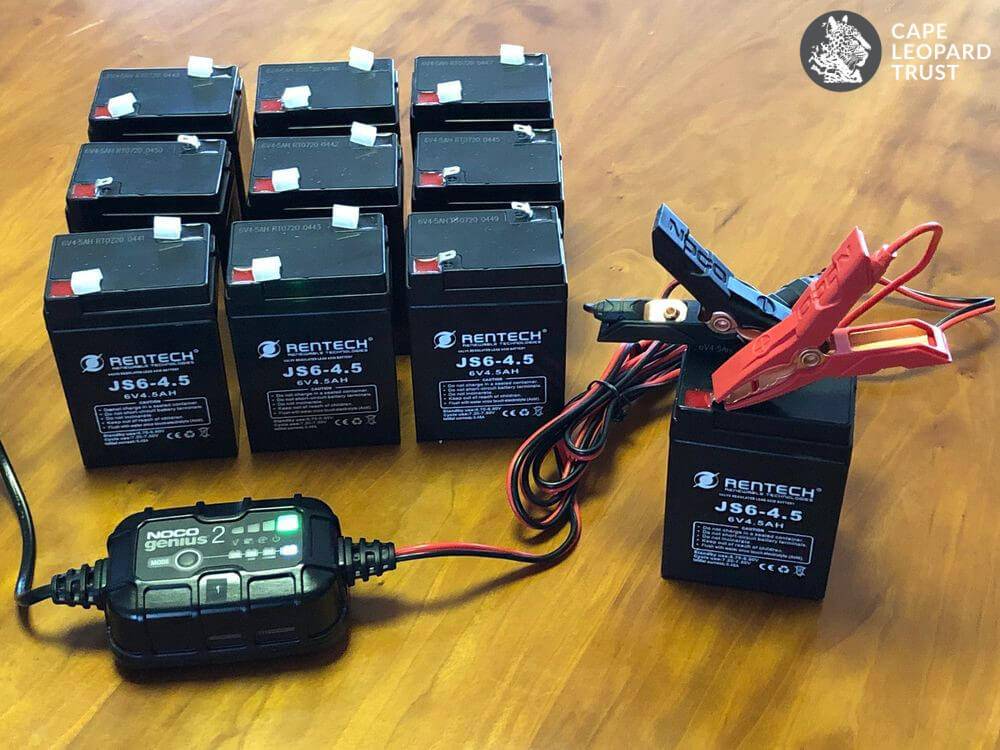
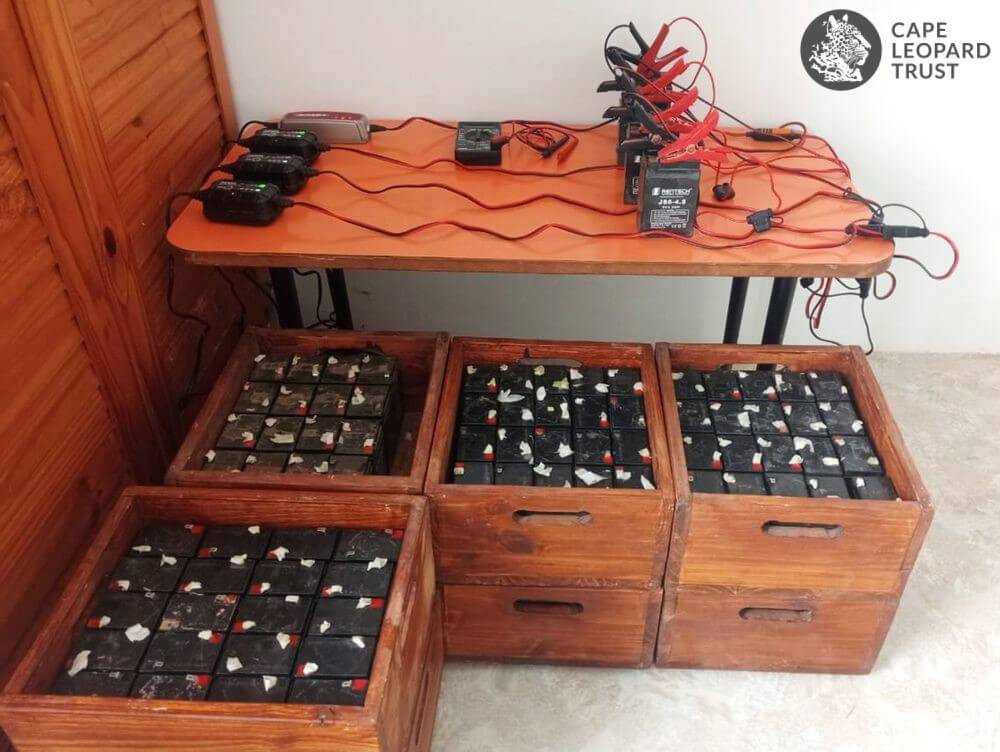
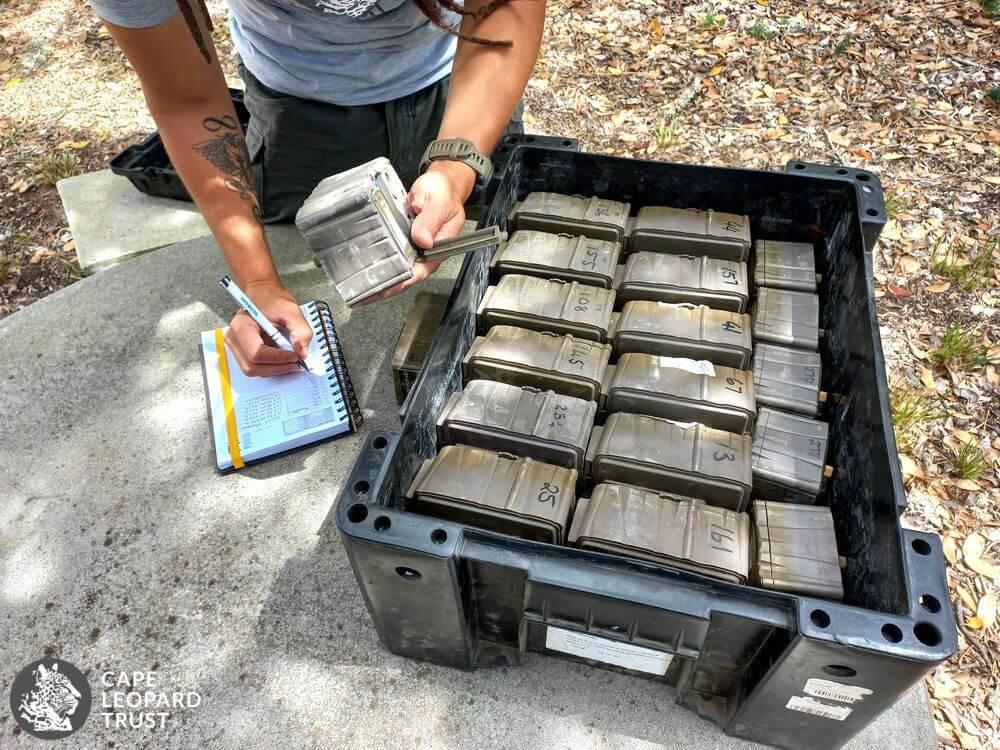
The Cape Leopard Trust is committed to responsible e-waste management, and a couple of years ago our research team transitioned from using disposable alkaline and lithium batteries in our camera traps, to rechargeable 6V sealed lead acid batteries. This was a conscious decision to make our large-scale camera surveys more sustainable, because although single-use AA batteries can technically be recycled, the material recovery rates are too low to be considered economically viable, and most of these batteries simply end up in landfills. Thanks to very generous support from renewable energy solutions provider Rentech, our camera traps are now powered by 6V rechargeable batteries which can readily be recycled. This approach reduces our reliance on disposable resources and aligns with global efforts to minimise the environmental impact of electronic waste.
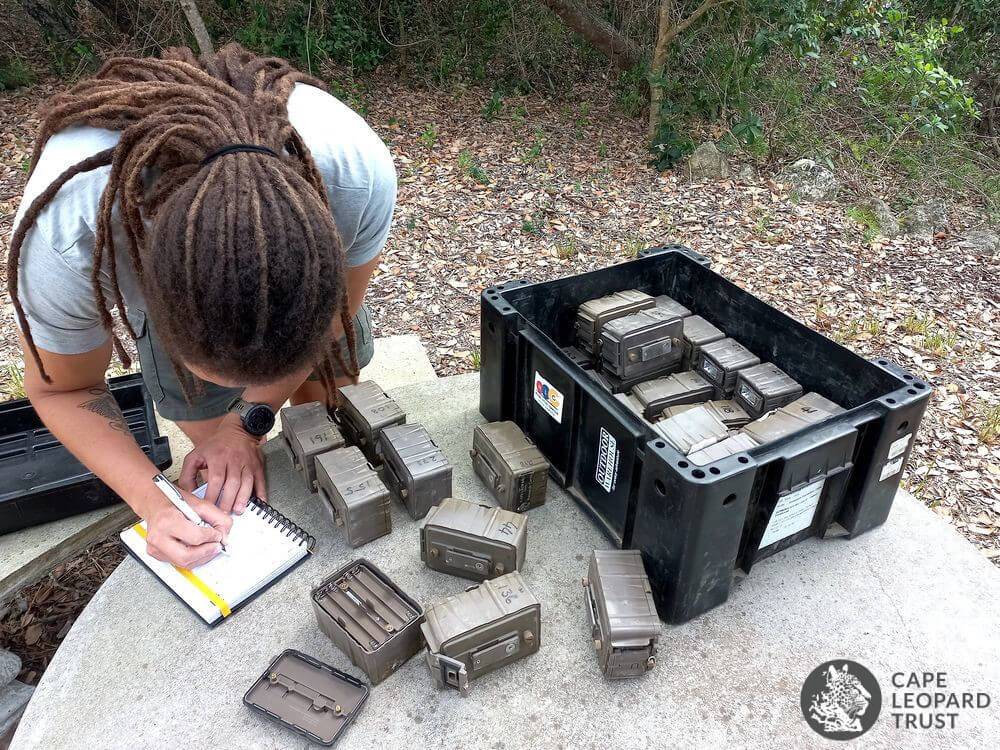
Similarly, our efforts to reduce our environmental footprint have recently received a great boost through our new partnership with Go Green Electronic Recycling. Although we make every effort to maximise the lifespan of our camera traps, inevitably they will start failing after a couple of years of being exposed to the elements. To prevent potential gaps in data collection, these less-than-reliable field cameras are then retired from our assets. Go Green Electronic Recycling’s expertise in processing electronic waste in a responsible and environmentally friendly way, ensures that the components of our decommissioned cameras and other electronics are handled with care, turning what was once considered waste into a potentially useful resource.
At its core, this initiative is about more than technology or recycling – it is about working towards a future where sustainability is considered in every decision we make. Whether you are managing a business or caring for a home, the choices you make in handling e-waste have far-reaching impacts. By choosing rechargeable, recyclable power sources and partnering with ethical recyclers like Go Green Electronic Recycling, you are not only reducing waste, you are supporting a model for responsible environmental management. We invite you to join us in this endeavour and be reminded that every step towards sustainability counts, no matter how small it may seem!
To see some fantastic photo results of our research using camera traps, go to bit.ly/CLTPiketUpdate2 and bit.ly/CederbergUpdate2.
To learn more about the exciting conservation and education initiatives of the Cape Leopard Trust, we encourage you to explore our social media pages and share in our vision of a greener, more responsible future (@capeleopartrust on Facebook, Instagram, LinkedIN, X and YouTube)